
Wasp Species in Cape Town: How to Identify and Control Them
Cape Town has three wasps you are likely to run into: the German wasp, the European paper wasp, and the South African paper wasp. Telling them apart matters more than you would think, because where a wasp nests and how it behaves is what decides how much trouble it causes and how it has to be handled. After years of removing nests around the city, we can usually name the species on sight. Here is how you can too.
What wasp species are common in Cape Town?
Three social wasps show up most often in Cape Town homes and gardens: the German wasp, which is a type of yellowjacket, the European paper wasp, and the South African paper wasp. All three build nests, sting to defend them, and hunt other insects, honeybees included.
The fastest way to tell the two most common ones apart is the antennae and the nest:
| Feature | German wasp | European paper wasp |
|---|---|---|
| Antennae | Black | Orange |
| Markings | Yellow and black body | Yellow and black body |
| Nests | In the ground, often in soil | Gutters, under eaves, roof tiles, trees |
| Temperament | Turns aggressive fast near the nest | Calmer, but killing one near the nest sets off the rest |
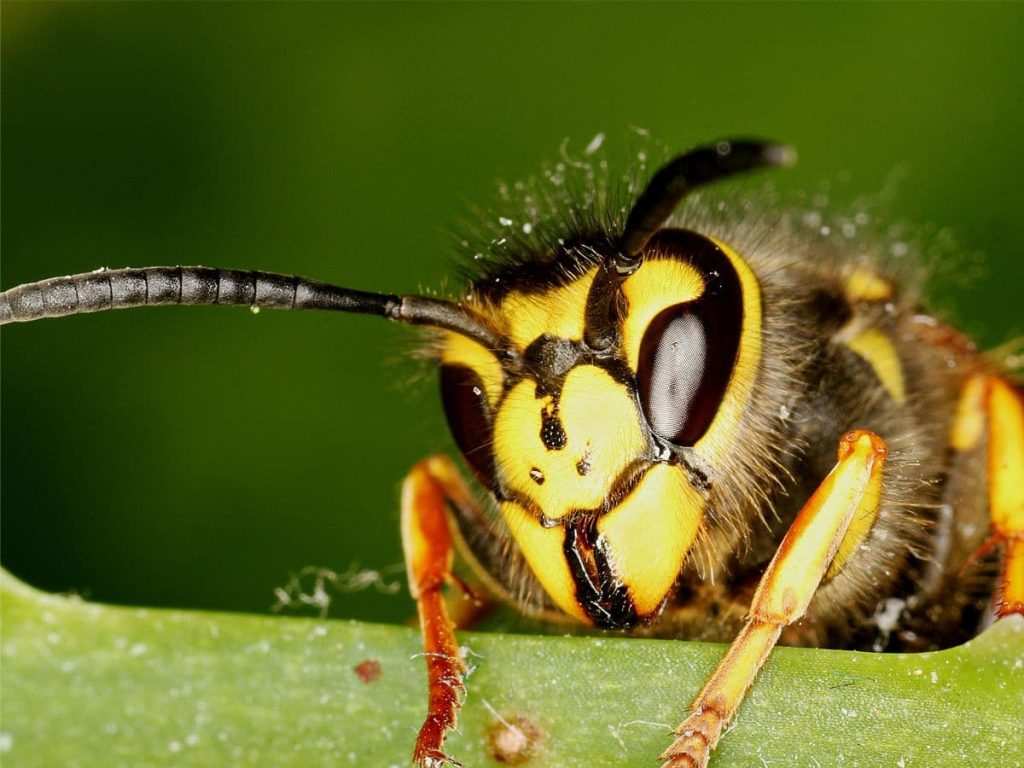
The German wasp
The German wasp belongs to the Vespidae family and is the yellowjacket most people picture when they think “wasp.” Black antennae are the giveaway. It usually nests underground in soil, which is how people get caught out: mowing a lawn or digging a bed and hitting a nest they never saw. Get close to that nest and it turns aggressive quickly. German wasps also strip bark from trees, and over time that can do real damage.
The European paper wasp
The European paper wasp is the one with orange antennae, and once you know to look for that, you cannot unsee it. It builds out in the open: in gutters, under eaves, in the arch of a roof tile, or in a tree. On its own it is less likely to come at you than a German wasp. The catch is the pheromone. Kill one near the nest and it releases a chemical signal that tells the others to attack, so swatting the first wasp you see is often how a small problem becomes a swarm.
The South African paper wasp
The third common one is our own native paper wasp. You will see it around gardens and eaves, much like the European species.
What is the difference between a wasp and a hornet?
A hornet is simply a large kind of wasp. So every hornet is a wasp, but not every wasp is a hornet. Hornets tend to give themselves away by their size, or by a bald, pale face. They are not naturally frightened of people and will usually leave you alone, but provoke one and it responds hard.
Are wasps in Cape Town dangerous?
Yes, more than most people expect. Unlike a honeybee, which stings once and dies, a wasp can sting again and again. A sting usually means discomfort for up to a day, but a minority of people react far more seriously and can go into anaphylactic shock, which is a medical emergency. Wasps are also hard on honeybees, which they hunt and kill, so keeping their numbers down around your home does the local bee population a favour too.
Wasps are not all bad
Worth saying, because it is true: in the right place, wasps earn their keep. They are predators, and farmers rely on them to hold crop pests down, particularly on maize and sugarcane. A wasp working through the aphids in a field is doing a job. A nest in your roof, next to where your kids play, is another matter.
A few things worth knowing about them
Of the roughly 30,000 wasp species that have been identified, only about a thousand are social, the kind that live in colonies. The ones in your garden fall into that small group. A colony runs on a queen, female workers, and males called drones. The drones exist to mate with the queen and then die soon after, and they cannot sting at all. When the cold comes, the workers and the old queen die off, and only newly mated queens survive, hibernating through winter and emerging in spring to start fresh nests. That is why a nest you ignore in autumn is not really gone. It has just sent next year’s queens off to hibernate.
How do you get rid of a wasp nest?
Do not do it yourself. This is the one piece of advice we will repeat as often as it takes. Wasp nest removal is a specialised job, for practical reasons: get it wrong and you can be stung many times over, and it is genuinely dangerous. Remove only part of a nest and the colony rebuilds. And because killing a wasp near its nest releases that alarm pheromone, a half-measure can turn the whole colony on you. We remove and dispose of nests safely, start to finish. If you have found something that looks like a wasp nest on your property, leave it alone and call us.
Wasp FAQs
What wasps are most common in Cape Town?
The German wasp (a yellowjacket), the European paper wasp, and the South African paper wasp. All three are social wasps that build nests and can sting repeatedly to defend them.
How can I tell a German wasp from a paper wasp?
Check the antennae and the nest. German wasps have black antennae and nest underground in soil. European paper wasps have orange antennae and build in the open, in gutters, under eaves, or in roof tiles.
Are wasp stings dangerous?
A wasp can sting repeatedly, and a sting typically causes discomfort for up to 24 hours. A minority of people have a severe allergic reaction and can go into anaphylactic shock, which needs emergency treatment.
Should I remove a wasp nest myself?
No. Removing part of a nest lets the colony rebuild, and killing wasps near the nest releases a pheromone that triggers the rest to attack. It is safer and more effective to have a professional handle it.
Dealing with wasps?
Found a nest, or wasps coming and going from a spot on your property? Leave it alone and let us deal with it. Call 021 012 5589 or WhatsApp 082 822 1940 for a free inspection.