
Cockroaches are the pest people are most embarrassed to call about, and the one you least want to ignore. If you have spotted one scuttling across the kitchen floor when you flicked the light on, the hard truth is that it is rarely travelling alone. In Cape Town’s warm months especially, a couple of roaches behind the fridge can turn into a settled population in a few weeks.
This guide covers the three cockroach species you are actually likely to meet in Cape Town, what pulls them into your home, the health risks they bring, and what genuinely gets rid of them. (Spoiler: it is not the can of spray under your sink.)
The three cockroaches you'll actually see in Cape Town
There are thousands of cockroach species worldwide, but only a handful bother us indoors. In Cape Town homes and businesses, three come up again and again. Telling them apart matters, because where they live and how you treat them is different for each.
| Species | Size | Colour | Where it hides | The giveaway |
|---|---|---|---|---|
| German | 13 to 16 mm | Light brown / tan | Warm, humid kitchens and bathrooms | Two dark stripes behind the head; breeds fastest |
| Oriental | around 25 mm | Glossy dark brown to black | Cool, damp drains, basements and under sinks | Comes up drains; stronger musty smell |
| American | 35 to 40 mm | Reddish-brown | Sewers, drains, warm ducts, roof voids | The largest; pale figure-of-eight behind the head. |
German cockroach

The German cockroach is the one we get called out for most, and the one you least want. It is small, roughly 13 to 16 mm, light brown, with two dark stripes running down the back of its head. It likes warm, humid spots, so it settles behind fridges, under counters, around dishwashers and in bathroom cabinets. What makes it such a problem is the breeding. One female and her offspring can produce hundreds of roaches in a year, which is why a German cockroach problem snowballs the moment you leave it alone.
Oriental cockroach
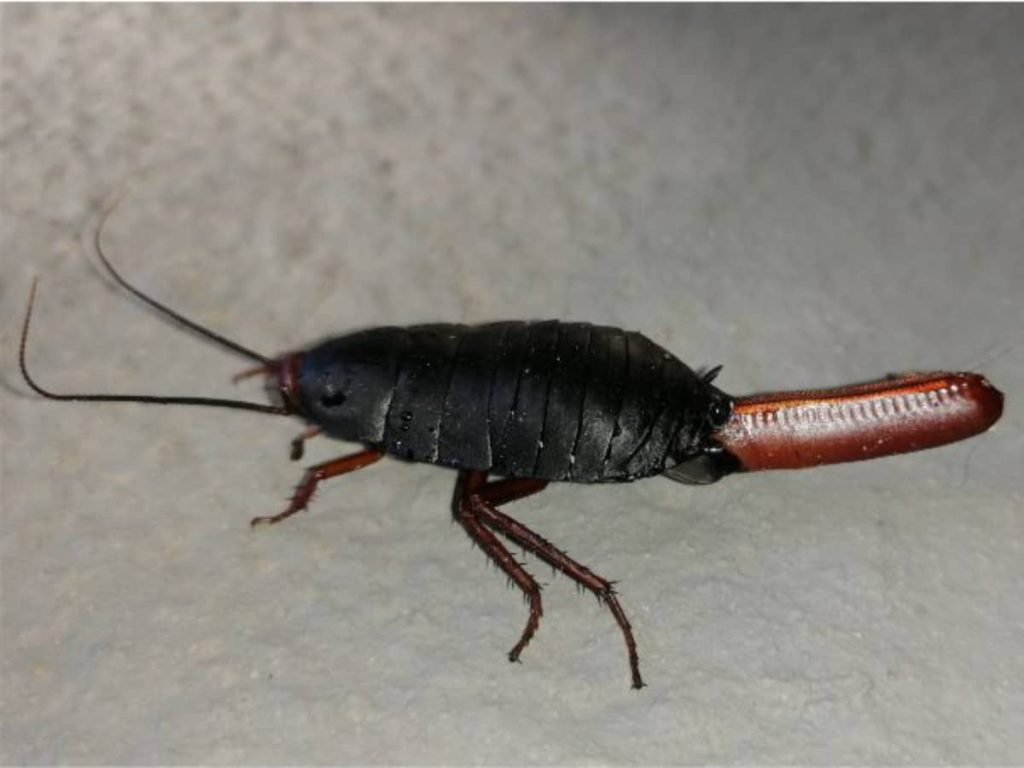
The Oriental cockroach, often called a waterbug, is bigger at around 25 mm and a glossy dark brown, almost black. It prefers cool and damp over warm and dry, so you find it around drains, under sinks, in basements and outside drains, and it often comes up through the plumbing. It moves more slowly than the German, gives off a stronger musty smell, and tends to turn up in the cooler, wetter corners of a property.
American cockroach
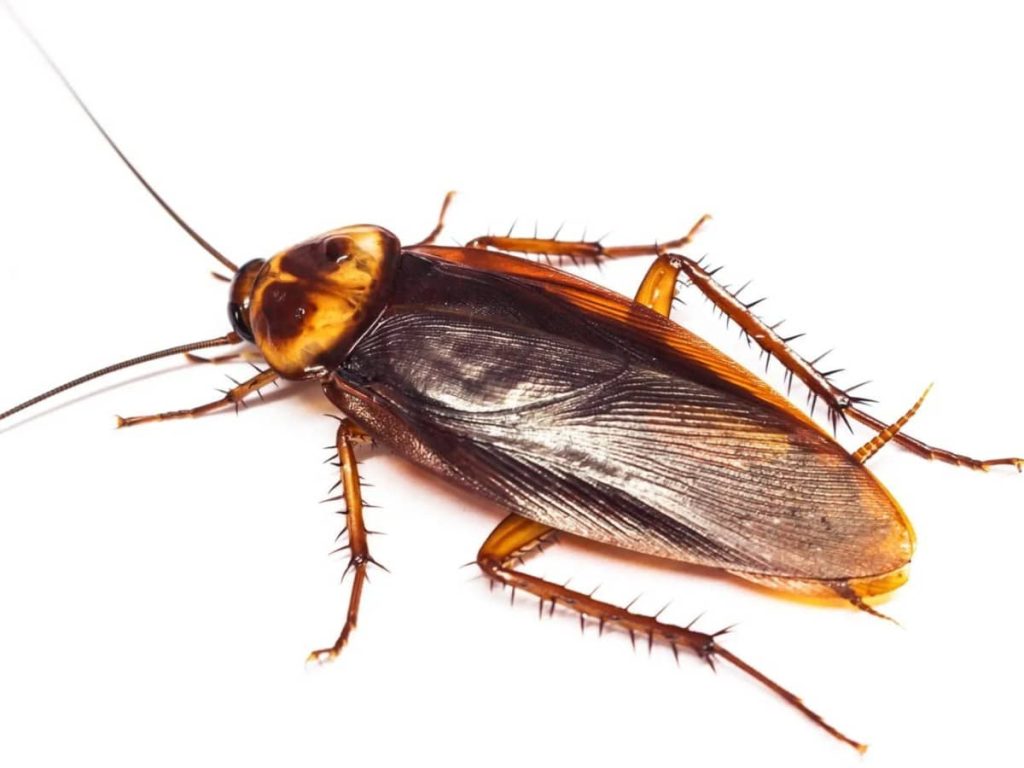
The American cockroach is the giant of the three, reaching 35 to 40 mm, reddish-brown, with a pale figure-of-eight marking behind its head. Despite the name it lives all over the world, and in Cape Town you will find it in sewers, drains, warm service ducts and the roof voids of older buildings. It can flutter its wings to glide a short distance, which is how one occasionally ends up somewhere alarming, like heading straight for a light.
What attracts cockroaches to your home?
- Food. They are scavengers and will eat almost anything, but they go for meats, sugars, fats and starches first. Crumbs, grease behind the stove, pet food left out overnight and the kitchen bin all count. They will chew cardboard, and when food runs short they will even turn on each other.
- Water. A roach copes far better without food than without water. Leaking pipes, a dripping tap, condensation and damp under the sink are all open invitations.
- Shelter. Warm, dark, tight gaps are ideal: behind and under appliances, inside cupboard voids, in cracks and behind skirtings. The tighter the space, the happier they are.
Clear away easy food and standing water and you make your home far less appealing. On its own, though, that rarely clears a problem once it is established.
Are cockroaches harmful?
Yes. Cockroaches are not only unpleasant to look at, they are a real health risk, and this is the part most people underestimate.
The first issue is allergies and asthma. Cockroach droppings, saliva and the shed skins they leave behind are a well-known trigger for asthma and allergic reactions, and children are especially vulnerable. In a home with a heavy infestation, that trigger is in the air around the clock.
The second is the diseases they carry. Cockroaches crawl through drains, bins and sewage, then straight across your worktops, plates and food, spreading bacteria the whole way. They are linked to E. coli, Salmonella, dysentery and typhus, among others. The stomach cramps, nausea, vomiting and diarrhoea that come with a Salmonella or E. coli infection are miserable, and a roach problem is one of the ways those bugs reach your food. According to the National Pest Management Association, cockroaches are associated with around 33 kinds of bacteria, six species of parasitic worm and more than seven other human pathogens.
The cockroach life cycle (and why it makes them so hard to kill)
Understanding how a cockroach breeds explains why they are so stubborn. The life cycle runs through three stages: egg, nymph and adult.
It starts with the female producing an ootheca, a small brown egg case shaped a little like a loaf of bread, with two neat rows of eggs inside. A single case holds dozens of eggs. Those hatch into nymphs, small wingless versions of the adult, which moult several times as they grow to full size.
Here is why it matters when you are trying to get rid of them. The egg cases are tough and shrug off ordinary surface sprays. So even if you kill every roach you can see, the next generation is sitting inside the oothecae waiting to hatch. That is the single biggest reason DIY treatments fail. They hit the adults and miss the eggs.

Can cockroaches get into your food?
Cockroaches in the kitchen are a problem wherever food is stored or prepared, from a home pantry to a restaurant or a food factory. They contaminate far more than they eat, fouling surfaces, packaging and stored food with droppings and bacteria as they move around.
For a food business the stakes climb higher. A single roach spotted by a customer or a health inspector can mean discarded stock, a failed inspection and a reputation knock that lingers online long after the roaches are gone. It is one of those problems that is much cheaper to prevent than to explain.
Signs you have a cockroach problem

How do you know you have more than a one-off visitor? Look for:
- Live roaches at night, scattering the second you switch on a light
- Egg cases glued into cracks and behind appliances
- Droppings that look like ground black pepper or coffee, or dark smear marks
- A musty, oily smell that gets stronger as numbers grow
- Shed skins near their hiding spots
Two or more of those, and you are looking at an active infestation, not a stray that wandered in from outside.
How to actually get rid of cockroaches
The honest answer is that a bad cockroach problem is very hard to clear with supermarket products, and it often gets worse when you try. Surface sprays kill the few roaches you see and drive the rest deeper into the wall voids, spreading the infestation. Foggers and bombs settle on open surfaces and never reach the cracks where roaches actually live. And nothing off the shelf deals properly with the egg cases.
What works is targeted gel bait placed where roaches feed and travel, an insect growth regulator that stops the eggs and nymphs developing, and proofing the gaps and drains they use to get in. That is the approach behind our cockroach control service in Cape Town, for homes and food premises alike, and it is built around breaking the breeding cycle rather than just flattening the adults.
Cockroach FAQs
Why do I have cockroaches when my house is clean?
Are cockroaches in Cape Town dangerous?
How long does it take to get rid of cockroaches?
What is the difference between a cockroach and a waterbug?
Seeing roaches in daylight?
If you are finding roaches during the day, or spotting egg cases, do not wait for the numbers to build. Book a free inspection and we will identify the species, find the harbourage, and tell you exactly what it will take to clear it.