
Termite Species in South Africa: How to Identify Them and What to Do
Finding termites in your home is not a discovery anyone enjoys. They are sometimes called white ants or wood ants, though they are not ants at all, and by the time most people notice them they have usually been at work for a while. Knowing which type you are dealing with, and what the warning signs look like, is the difference between catching the problem early and paying for structural repairs later. Here is what turns up in South African homes and how to recognise it.
What termites look like
Termites are pale, soft-bodied insects that live in large social colonies. A colony is split into castes, and you will rarely see most of them, because they stay hidden inside wood or underground. The ones people do notice are the reproductives: winged termites that leave the nest in a swarm to start new colonies, and they are often mistaken for flying ants. Workers are small and cream-coloured. Soldiers have darker heads and larger jaws for defending the nest.
Types of termites in South African homes
Three types cause most of the trouble here, and they behave quite differently.
Subterranean termites
These are the most destructive of the lot. They live in underground colonies that can run into the hundreds of thousands, and in large nests, well into the millions. They need soil contact and moisture, and they reach the wood in your home by building mud tubes up from the ground. Because they work from below and behind, the damage is often well advanced before anything shows on the surface.
Dampwood termites
Dampwood termites go after wood with a high moisture content, so they turn up where there is a leak, poor drainage, or timber sitting against damp ground. They tend to be larger than other termites. Fix the moisture problem and you remove much of what draws them in.
Drywood termites
Drywood termites are the exception that needs neither soil nor damp. They live entirely inside dry timber, which means they can infest furniture, roof timbers and structural wood well away from any ground contact.
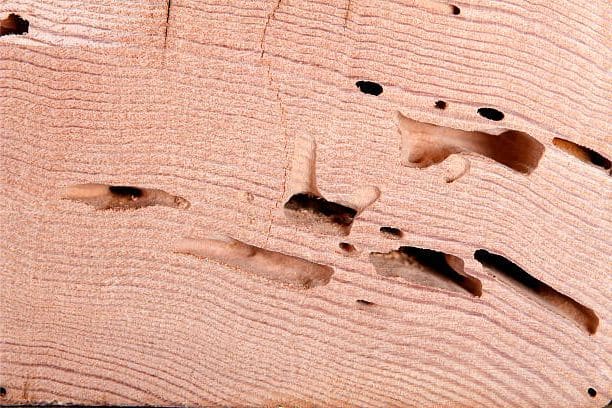
How to tell you have termites
Termites hide, so you are usually spotting the evidence rather than the insect itself. The common signs are mud tubes running up walls or foundations, a scatter of discarded wings near windows or doors after a swarm, timber that sounds hollow when you tap it, and paint or wood surfaces that look blistered or bubbled. If you find any of these, treat it as urgent. Termite damage compounds quietly, and waiting only makes the repair bigger.
A few things worth knowing about termites
Termites are more impressive than their reputation suggests. They do not only eat wood. They will work through almost anything made from plants, including paper, cardboard and fabric, because what they are really after is the cellulose. Their colonies are tightly organised, split between a queen and king, workers, and soldiers, and no colony functions without all three. A queen is astonishingly productive, laying tens of thousands of eggs, and the colonies grow to remarkable size. The largest termite mounds recorded in Africa have reached around twelve metres, roughly the height of a two-storey building. And for all the damage they do, they have one determined natural enemy: ants. Termites and ants compete hard for the same ground, and a strong ant presence can hold a young termite colony in check.
What to do about termites
Termites are not a do-it-yourself pest. By the time you can see them, the colony is usually established and hidden, and surface treatments do not reach it. Catching them early with a professional inspection is what limits both the damage and the cost. Pest Managers handles termite control across Cape Town, from inspection through to treatment. If you have found mud tubes, discarded wings, or wood that sounds hollow, get it looked at before it spreads further.
Termite FAQs
Are termites the same as white ants?
No. “White ants” is a common name for termites, but termites are not ants at all. They belong to a different insect group and are actually more closely related to cockroaches.
What are the signs of termites in a house?
The usual signs are mud tubes on walls or foundations, discarded wings near windows after a swarm, timber that sounds hollow when tapped, and blistered or bubbled wood surfaces. You often see the evidence long before you see a termite.
How much damage can termites do?
A great deal, and expensively, because they work hidden and can weaken structural timber before you notice anything. This is why early detection matters so much with termites.
Can I get rid of termites myself?
Not reliably. The colony is usually hidden and, in the case of subterranean termites, underground, so DIY surface treatments miss it. A professional inspection and treatment is the effective way to deal with them.
Think you have termites?
Mud tubes, discarded wings, or wood that sounds hollow? Get it inspected before the damage spreads. Call 021 012 5589 or WhatsApp 082 822 1940.