
Flea Species in South Africa: How to Identify and Get Rid of Them
Most people never stop to think about which flea they have. A flea is a flea. But the species matters more than you would expect, because it tells you where the infestation is really coming from and what it will take to clear it. A flea living on your cat is a very different problem from one breeding in a bird’s nest in your roof.
Here are the fleas you are most likely to come across in South African homes, how to tell them apart, and how to get rid of them for good.
The cat flea is almost always the culprit
If you have fleas in your home, they are almost certainly cat fleas (Ctenocephalides felis), whether or not you own a cat. Despite the name, the cat flea is also the most common flea found on dogs, and it is responsible for the overwhelming majority of household infestations in South Africa.
Cat fleas are small, dark reddish-brown, and flattened from side to side, which lets them move easily through fur. They do not fly. They jump, and they jump remarkably well for their size, which is how they move between hosts and around a room. Left alone on a host, a female can begin laying eggs within a day or two, and she can lay up to around fifty a day.
Dog fleas, human fleas and the rest
The dog flea (Ctenocephalides canis) looks nearly identical to the cat flea and behaves much the same way, but it is far less common. Even on dogs, the cat flea usually outnumbers it.
The human flea (Pulex irritans) was once widespread but is now uncommon in most urban areas. It prefers people and pigs, and tends to turn up in rural settings or where animals are kept close to the home.
Two others are worth knowing because they point to a hidden source rather than a pet. Bird fleas breed in the nests of pigeons, sparrows and other birds, so a flea problem in an upstairs room with no pets often traces back to a nest in the roof or under the eaves. If that sounds like your situation, bird proofing deals with the nesting that causes it. And the rat flea (Xenopsylla cheopis) lives on rodents. It matters because it is the flea historically linked to spreading disease, so fleas appearing alongside signs of rats are worth taking seriously.
| Flea | Latin name | Usual host | What it tells you |
|---|---|---|---|
| Cat flea | Ctenocephalides felis | Cats, dogs, indoors | The default household flea |
| Dog flea | Ctenocephalides canis | Dogs | Treated the same as cat fleas |
| Human flea | Pulex irritans | People, pigs | More common in rural areas |
| Bird flea | Various species | Birds’ nests | Check the roof for nesting birds |
| Rat flea | Xenopsylla cheopis | Rats, mice | A sign of rodents nearby |
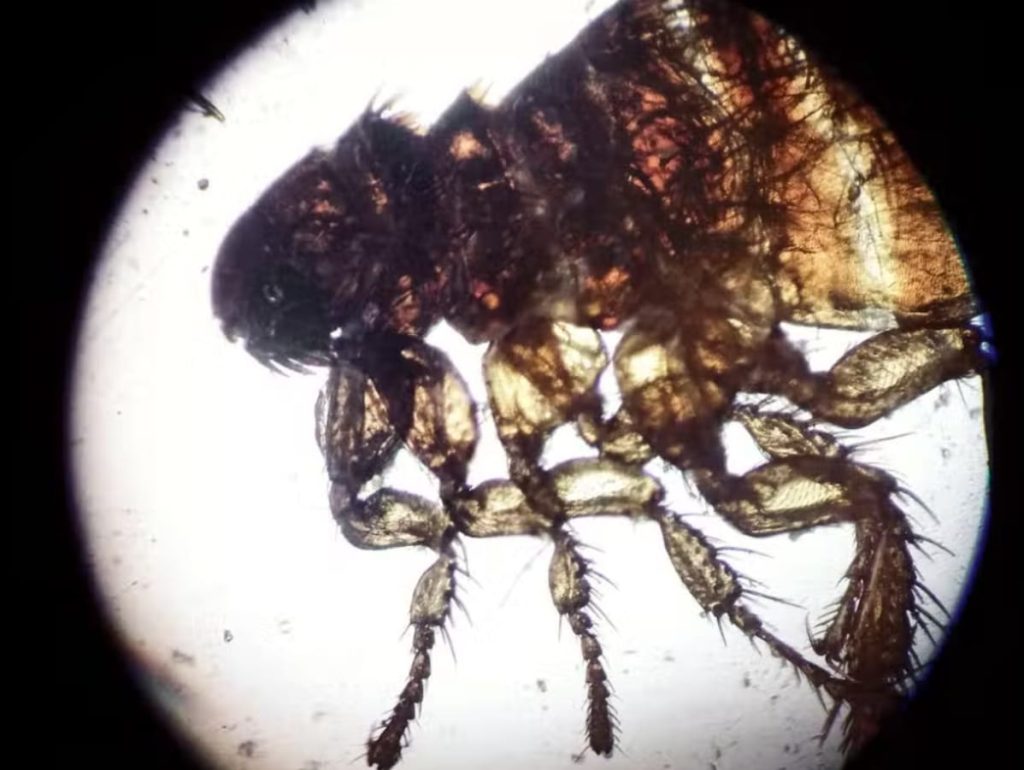
How to tell you have fleas
The clearest sign on people is the bites: small, itchy red bumps, usually clustered around the ankles and lower legs where fleas can reach most easily. On a pet, watch for constant scratching and biting, often around the neck, belly and the base of the tail.
Then look for flea dirt. It shows up as specks of what looks like black pepper in the fur or on bedding, and it is actually flea droppings. Dab it with a damp tissue, and if it smears rusty red, that is digested blood and confirms fleas. On a pale-coated animal you may even see the reddish-brown marks where fleas have been feeding. Part the fur and you can often watch the fleas themselves darting through it, and you will find them in pet bedding, in carpets, and in the kennel.
If you spot these signs, move quickly. A flea population expands fast, and a handful of fleas becomes a household problem in a matter of weeks.
Why treating the pet alone never works
Here is the part that catches almost everyone out. Only a small fraction of a flea population is the adult fleas you can see. The rest, the eggs, larvae and pupae, sit in carpets, bedding, floor cracks and soft furnishings. That is exactly why treating the pet alone never works, and why the problem comes straight back a week later.
The species tells you where to look. Cat and dog fleas mean the source is your pets and the spots where they rest. Bird fleas mean a nest, usually in the roof, that has to be removed along with treatment. Rat fleas mean rodents, and the fleas will not stop until the rats are dealt with.
How to get rid of fleas
Clearing fleas properly means hitting the pet and the environment at the same time. Skip either one and you are back where you started. Here is the order that works.
Start with the vet. Your vet has flea products matched to your pet’s size and to how bad the infestation is. Don’t wait on this. The longer an infestation runs, the more uncomfortable and, in bad cases, unwell your animal gets.
Wash and vacuum. Wash the pet’s bedding, and if the fleas have spread, wash the rest of the household bedding too. Vacuum the carpets, and during an active infestation, do it daily to lift eggs and larvae before they hatch.
Treat the whole environment, inside and out. This is the step most people miss. Carpets and skirtings need treating, and so do the places eggs and larvae actually sit: sandy spots, cracks, and pet shelters or kennels. Fleas breed outdoors as readily as indoors, so an inside-only treatment leaves half the problem in place.
Expect a follow-up. Depending on how heavy the infestation is, a second treatment is often needed to catch the fleas that were still eggs or pupae the first time round.
How to keep fleas from coming back
Prevention is far easier than treatment. What that looks like depends on your situation.
Offices with carpeting are surprisingly prone to fleas, because large carpets and a steady stream of people give fleas plenty of places to settle and plenty of ways to arrive. A regular monthly treatment keeps them from taking hold. For a home with pets that mix with other animals often, a treatment roughly every six months is usually enough, alongside the routine flea prevention your vet keeps your animal on.
When to call a professional
A mild case on a single pet can often be handled at home with the steps above. But when the source is birds in the roof or rats in the ceiling, when the infestation is heavy, or when it keeps returning no matter what you do, that is the point to bring in help.
Pest Managers treats flea infestations in homes and businesses across Cape Town. We identify the source first, then treat both the pest and the environment so it does not return.
Flea FAQs
What kind of flea is in my house?
Almost certainly the cat flea (Ctenocephalides felis), even if you don’t own a cat. It is by far the most common flea in South African homes and is found on dogs just as often as cats.
How do I know if my pet has fleas?
Look for scratching and biting around the neck, belly and tail base, and for flea dirt in the fur, which looks like black pepper specks and smears rusty red on a damp tissue. You can often see the fleas themselves when you part the fur.
Why do fleas keep coming back after I treat them?
Because the fleas you can see are only a small share of the population. The eggs, larvae and pupae are in your carpets, bedding and floor cracks. If you treat the pet but not the environment, the next generation hatches and the problem returns within a week or two.
Can I get rid of fleas without a professional?
A light infestation on one pet often clears with a vet treatment, thorough washing and vacuuming, and an environment treatment. But if birds or rodents are the source, or the infestation is heavy or recurring, professional treatment is the reliable way to end it.
Dealing with fleas?
We will find the source, treat the pest and the environment, and stop the fleas coming back. Call 021 012 5589 or WhatsApp 082 822 1940 for a free inspection.